
Dengue Prevention Cleanliness Drive & Public Health Awareness Campaign 2026 at Saroi High School
SHS Environment & Health Welfare Cell
Contributor / Academic Faculty
AI Smart Summary
AIKey takeaways and essential insights in 30 seconds
To curb dengue outbreak and eliminate Aedes mosquito breeding sites during the monsoon season, a comprehensive day-long cleanliness drive and health awareness campaign was successfully executed at Saroi High School with spontaneous participation of teachers, staff, and students.
- Consistent practice and structured planning are essential for academic excellence.
- Acquiring real-world problem-solving skills is the core purpose of modern education.
- Integrating technology with intellectual effort helps students achieve global standards.
Introduction: Saroi High School's Proactive Stance Against Dengue
During the monsoon and post-monsoon seasons, the threat of dengue fever and vector-borne diseases escalates significantly across Bangladesh, including the hilly regions of Lama Upazila in Bandarban. In particular, stagnant rainwater serves as an optimal breeding ground for the Aedes mosquito, posing serious risks to student health and uninterrupted academic activities. Recognizing this imperative, Saroi High School orchestrated a day-long "Comprehensive Dengue Prevention & Campus Cleanliness Campaign" on September 30, 2026, spearheaded by the School Managing Committee and academic faculty.
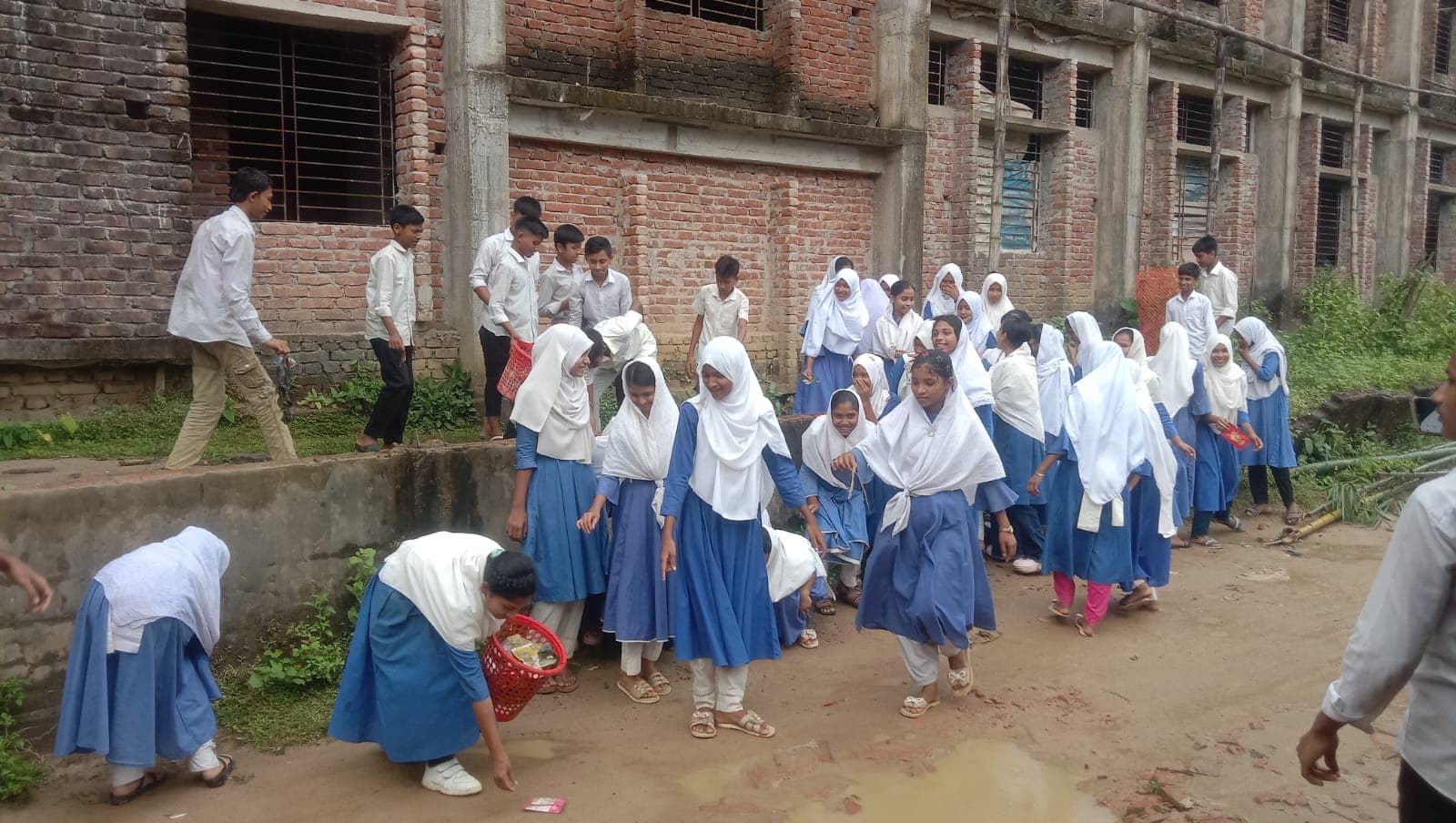
The campaign witnessed spontaneous and enthusiastic participation from teachers, administrative staff, and students across Grades 6 through 10. Commencing with a morning assembly outlining health guidelines at 9:00 AM, the initiative continued until 1:00 PM, thoroughly sterilizing and sanitizing the entire school premises.

1. Scope of the Drive & Field-Level Execution
To ensure rigorous coverage, the school premises were systematically partitioned into four operational zones, each overseen by designated faculty coordinators:
- Zone A (Academic Building & Rooftops): Clearing rooftop water collection points, sunshades, rainwater gutters, and ensuring unhindered corridor drainage.
- Zone B (Memorial Mural & Botanical Gardens): Clearing fallen leaves, plastic debris, and stagnant moisture around the national memorial mural and landscaped flowerbeds.
- Zone C (Drainage & Wastewater Outlets): Unclogging perimeter drainage channels and applying larvicidal agents to prevent standing water.
- Zone D (Playground & Campus Perimeter): Clearing surrounding bush areas, collecting non-biodegradable waste, and disposing of debris in designated waste receptacles.


2. Destroying Aedes Breeding Sites & Applying Disinfectants
Because Aedes mosquitoes breed predominantly in clean, stagnant water, the task forces concentrated on identifying and eliminating micro-reservoirs:
- Removal of Coconut Shells and Discarded Plastics: Students combed the campus perimeter to gather discarded beverage containers, chip packets, and biodegradable debris for proper disposal.
- Sanitizing Planter Trays and Sunshade Gutters: Potted plants were cleared of accumulated water, and gravel bases were treated to hinder mosquito larvae proliferation.
- Application of Bleaching Powder & Antiseptic Solution: Drains, damp shaded corridors, and washing zones were treated with calculated measures of bleaching powder to neutralize bacterial and vector growth.


3. Dengue Awareness: The '3-3-3 Formula' and Health Directives
Alongside practical cleaning, educators conducted briefing sessions instructing students on essential prophylactic measures, encapsulated in the memorable '3-3-3 Rule':
Saroi High School '3-3-3 Formula':
- Every 3 Days: Discard or refresh standing water in any domestic or school vessel before mosquito larvae can mature into pupae.
- 3 Critical Symptoms: Promptly recognize high acute fever, retro-orbital pain (behind the eyes), and severe joint ache accompanied by rash.
- 3 Immediate Safeguards: Always sleep under mosquito nets, wear protective long sleeves during daylight hours, and never administer pain relievers like aspirin without formal clinical consultation (relying strictly on paracetamol and oral hydration).
4. Leadership Message from the Headmaster
In a concluding debriefing assembly, the Headmaster of Saroi High School remarked:
"School is not merely an arena for textbook memorization; it is an incubator for civic responsibility and community welfare. Today's dedicated cleanliness campaign demonstrates that united, conscious action can triumph over any public health challenge. We expect our students to extend this civic vigilance beyond school borders into their homesteads and neighborhoods."
Every student was entrusted with the community responsibility of educating at least five neighborhood households regarding household water management.
Conclusion: Continuous Surveillance for a Safe Campus
Maintaining a healthy, vector-free environment requires ongoing vigilance rather than an isolated effort. A dedicated 'Campus Hygiene & Surveillance Task Force' will conduct weekly inspections throughout the monsoon and autumn months. Saroi High School remains steadfast in its dedication to providing a pristine, inspiring, and hazard-free educational sanctuary for all learners.


